
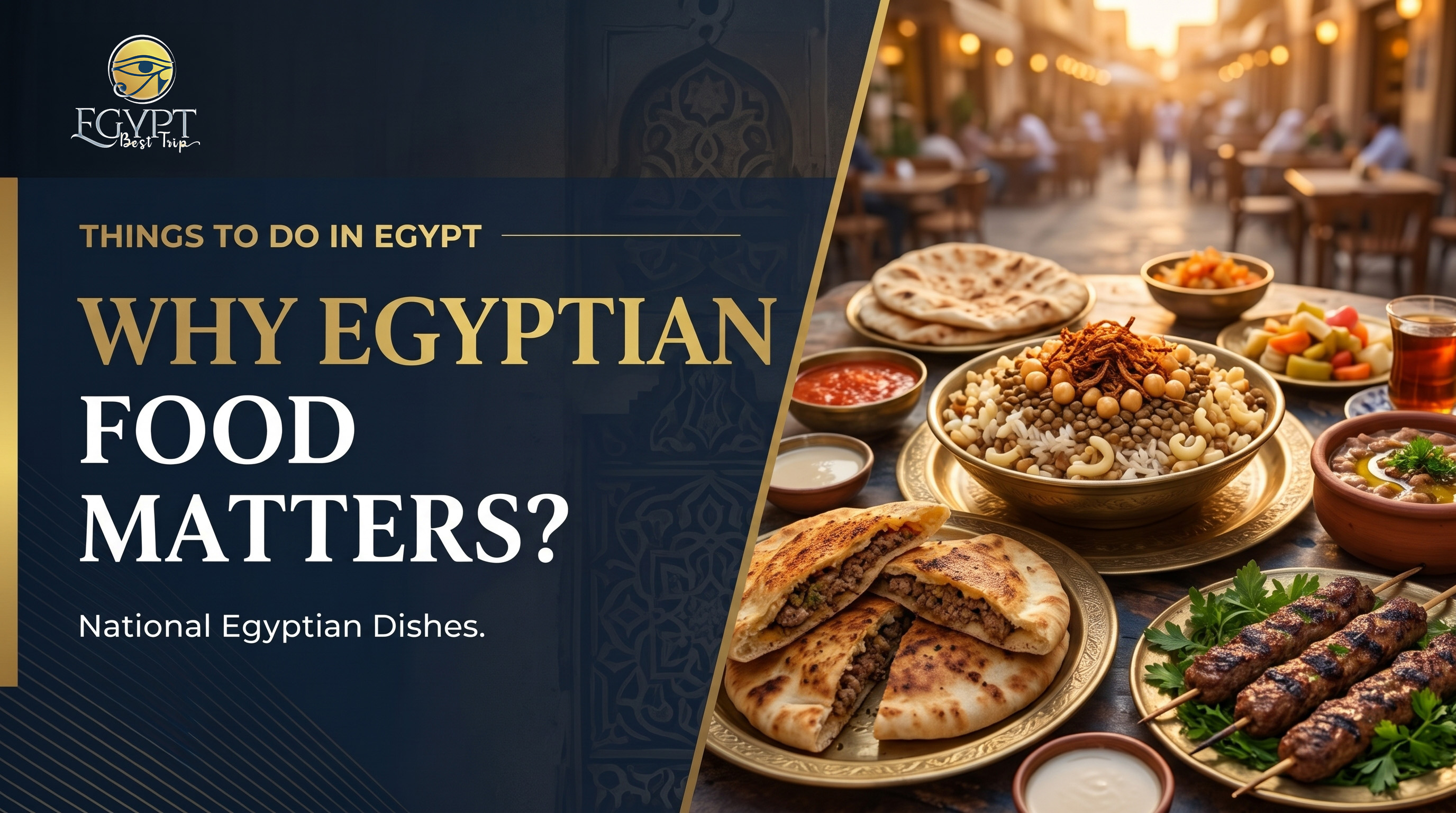
Why Egyptian Food Matters?
Egyptian food is full of stories! Koshary is the food of migration, Ful Medames is the food of the Pharaohs, Molokhia is the food of many years of home cooking and Hawawshi is proof that the very best Egyptian street food can be found in its simplicity. It's all very generous and very comforting from street cart to family dinner. Come hungry and take some aish baladi to eat it all with.
Koshary: The National Dish
Koshary is the first thing that comes to mind when Egyptians are asked about food. It's the national dish of Egypt and in 2025 it was inscribed on the UNESCO Representative List of the Intangible Cultural Heritage of Humanity.
Ful Medames & Ta'ameya: The Breakfast of Pharaohs
You can't walk through any part of Cairo without being hit by the smell of Ful Medames. It's the quintessential Egyptian breakfast, eaten by all walks of the street. It's simply slow cooked fava beans with olive oil, lemon, garlic and cumin. Normally eaten with aish baladi (the traditional Egyptian flatbread which has been eaten in Egypt for over 5000 years) the word aish actually means 'life' so you can see how central bread is to the Egyptian diet.
Molokhia: Superfood of Pharaohs
No discussion of food would be complete without Molokhia. It's a green soup made from jute mallow leaves (which are chopped up and cooked in a good chicken stock) and then topped with a hot sizzling paste of garlic and coriander (tasha) whilst it's still hot. It's very smooth and quite slimy. It has a very rich, earthy, savoury taste. It's been eaten in Egypt for centuries and there's a legend that it was actually banned in the 10th century because of its aphrodisiac properties! It's a very common home cooked meal these days and is normally eaten with rice, chicken or rabbit.
Hawawshi: Cairenes Love This!
If Koshary is the food then Hawawshi is the signature snack of Cairo. It's the ultimate comfort food. It's minced beef mixed with onions, green peppers and chilli and stuffed into aish baladi which are then either baked or grilled to give you that lovely crispy exterior. You end up with a very juicy, very spicy meal.
Egyptian Drinks: Karkade, Shai & Asab
Egyptian food would be nothing without these incredible drinks. Karkade (hibiscus tea) is a stunningly coloured drink made from the dried hibiscus flowers. It's served cold in the heat of the day and warm in the winter. It's a very tangy, refreshing drink which cuts through the sweet and the sour. Shai (tea) is the drink of choice in social situations. It's black, it's sweet and you'll find it in every kitchen from the home to the street side kiosk. Asab (sugar cane juice) is the best thing to drink on a hot day in Cairo. It's freshly squeezed from the sugar cane juicers on the street and is naturally sweet.
Egyptian food is not just fuel. It is a 5,000-year-old story served on a plate. From the humble bowl of Koshary that feeds millions daily to the garlicky green soup known as Molokhia, the cuisine of Egypt reflects a remarkable blend of Pharaonic roots, Mediterranean influences, and street-level practicality. Whether you are planning a trip to Cairo or simply curious about what Egyptians eat every day, this guide walks you through the essential Egyptian cuisine, the best Egyptian street food, and the traditional dishes you should not miss.


